 Deutsch
 English
 Français
 Italiano
 Polski
 Español
 Österreich


Building and expanding fiber optic networks
Network level 3 connects the central fiber optic network with the connection areas. For an economical and future-proof expansion, coordinated pipe systems, connection technology, and installation methods are essential. Discover how modern speedpipe systems make fiber optic expansion more efficient.
What are Network Level 3 networks?
Network Level 3 networks form the foundation of modern FTTH networks
Network level 3 (L3) connects the central network infrastructure of a fiber optic network with the individual expansion areas and household connections. It comprises the routes between main distributors, PoPs (Points of Presence), and the connection areas in cities and municipalities. The quality and future-proofing of a fiber optic network are largely determined by the planning and execution of this network level.
Today, duct bundle and microduct systems are used for economical fiber optic expansion. They enable flexible network planning, create reserves for future expansions, and facilitate the blowing-in of fiber optic cables. Depending on project requirements, pipe bundles can be installed using plowing, trenching, open trench, or directional drilling methods
Level 3 networks form the foundation for FTTx infrastructures and support both the expansion of FTTH networks and future requirements for bandwidth, digitalization, and smart city applications.
Solutions for network level 3 expansion

Blow fibre optics into speedpipe
The most efficient way of occupating microduct system with fibre optic cables.
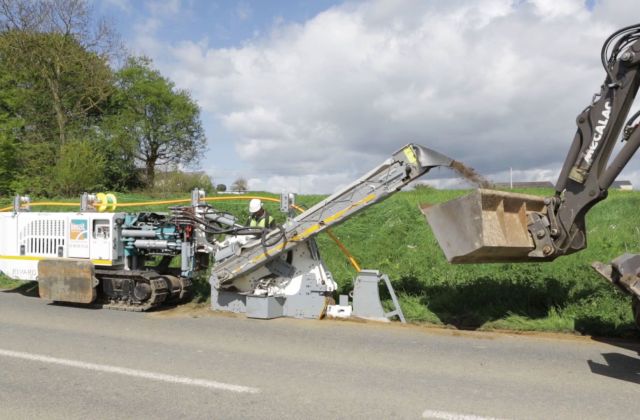
Installation techniques for speedpipe bundles
Find the right installation method for expanding fiber optic networks.
Why use microduct systems in Network level 3 expansion?
Microduct systems support economical FTTH expansion.
Modern microduct systems offer decisive advantages for new construction and the expansion of fiber optic networks:
- Reserve capacity for future network densification
- Fast and safe blowing-in of fiber optic cables
- Adaptability to different installation methods
- Reduction of civil engineering costs through possible co-installation
- High operational reliability and long-term protection of the fibers
Combining speedpipe microducts, speedpipe bundles, and fittings creates coordinated system solutions for efficient fiber optic expansion at network level 3.
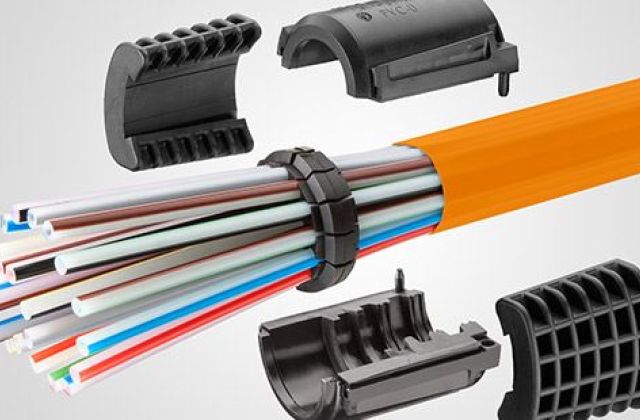
speedpipe bundles SRV-G
speedpipe bundle ground SRV-G tc bundle various colored, thick-walled speedpipe ground by means of a tight outer sheath.
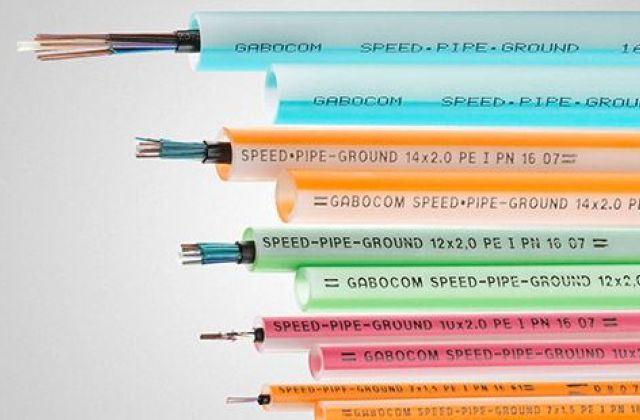
speedpipe ground
For the extension or new construction of passive infrastructure in fibre optic expansion.

Future-proof fiber optic network expansion
The expansion of a fiber optic network doesn't end with the first construction phase. Additional household connections, new commercial areas, or growing bandwidth requirements often make later network adjustments necessary. That's why we rely on NE3 network components designed for flexible planning and expanded capacity.
Microduct systems create the prerequisites for flexible network development. Free reserve capacities allow for the subsequent installation of additional fiber optic cables without having to reopen existing routes. This reduces civil engineering costs and supports economical expansion over the entire lifecycle of the network.
With coordinated speedpipe bundles, fittings, network distributors, and splice closures, future-proof infrastructures are created that meet both current and future broadband network requirements.
FAQ
- What are network level 3 networks?
Network level 3 (NE3) connects central network nodes such as PoPs (Points of Presence) and main distributors with the connection areas of a fiber optic network. It forms the distribution infrastructure between the backbone network and the household connection network and is an essential prerequisite for the expansion of modern FTTH networks.
- What role does network level 3 play in fiber optic expansion?
Network level 3 networks transport and distribute fiber optic capacities between central network nodes and the connection areas of residential and commercial zones. They form the basis for connecting households, businesses, and public facilities to high-performance broadband networks.
- Which products are used in L3 expansion?
speedpipe bundles, speedpipe, fittings, street cabinets, and closures, among others, are used for the expansion of L3 networks. Together, they form a scalable infrastructure for the installation, distribution, and protection of fiber optic cables.
- Why are microduct systems used in L3 expansion?
Microduct systems enable the economical and flexible installation of fiber optic networks. Free duct capacities can be used for later expansions without having to reopen existing routes. This reduces construction costs and creates network reserves for future connections.
- Which installation methods are suitable for L3 networks?
Depending on project requirements, speedpipe bundles can be installed using the plowing method, milling method, open trench, or directional drilling technology. The choice of method depends on soil conditions, route routing, and the economic requirements of the expansion project.
- How can fiber optic networks be expanded in a future-proof way?
Future-proof L3 networks are planned with sufficient duct capacities and scalable system components. Microduct systems, network distributors, and splice closures enable the later expansion of the network without the need for extensive civil engineering work.
- What role does network level 3 play in FTTH expansion?
Network level 3 forms the connection between the central network infrastructure and the household connections. It is thus an essential part of every FTTH infrastructure and creates the prerequisite for supplying buildings with high-performance fiber optic connections.